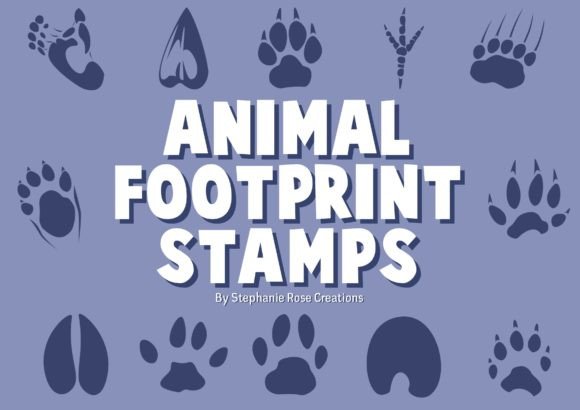
Unlocking Creativity: The Ultimate Guide to Procreate Animal Footprint Stamps
In the vast digital landscape of illustration and design, the tools we choose often define the texture and soul of our artwork. For artists using Procreate, one of the most versatile yet underutilized features is the ability to create and use custom stamps. Among these, animal footprint stamps stand out as a unique resource that bridges the gap between realistic nature study and whimsical creative expression. Whether you are an educator designing lesson plans, a graphic designer creating patterns, or a hobbyist sketching your pet's journey, understanding how to leverage these assets can transform your workflow.
This guide explores the world of Procreate animal footprint stamps, specifically focusing on collections that offer up to 87 different types of animal footprints. We will delve into why these specific assets matter, how they fit into modern digital art practices, and practical ways to integrate them into your designs to achieve professional results.
The Power of Custom Stamps in Digital Art
Before diving into the specifics of animal tracks, it is essential to understand what makes a stamp valuable in Procreate. Unlike standard brushes that require continuous motion and pressure sensitivity to draw a line, a stamp applies a pre-defined shape with a single tap. This functionality mimics the physical act of using an ink pad and a rubber stamp, offering instant consistency and repeatability.
For beginners, this feature removes the intimidation of drawing complex organic shapes from scratch. For experienced professionals, it serves as a time-saving mechanism for pattern creation and textural layering. When you have access to a comprehensive library of 87 distinct animal footprints, the possibilities expand from simple doodles to intricate storytelling elements. These stamps allow you to populate a scene with life without needing to render every paw, hoof, or claw individually.
Why 87 Varieties Matter for Your Workflow
You might wonder why such a large number of variations is necessary. In the natural world, no two animals walk exactly alike, and even within a species, footprints vary based on size, gait, and terrain. A collection of 87 types ensures that you have coverage across the animal kingdom, from the microscopic prints of a mouse to the massive imprints of an elephant.
- Diversity of Species: A robust set includes mammals, birds, reptiles, and amphibians. This allows for accurate representation in educational materials or nature journals.
- Variation in Gait: Some sets include not just the static print, but variations showing the stride or the angle of impact, adding dynamic realism to your illustrations.
- Scalability: With 87 options, you likely have different sizes of the same animal (e.g., a kitten vs. a tiger), which is crucial for perspective and depth in your artwork.
This variety prevents the "copy-paste" look that plagues amateur digital art. By selecting from a wide range, you can mix and match to create a natural, chaotic trail that looks authentic rather than mechanical.
Practical Applications in Modern Design and Education
The utility of animal footprint stamps extends far beyond personal sketching. They play a significant role in various sectors of modern life, including education, business branding, and creative therapy.
Educational Resources and Storytelling
Teachers and content creators often struggle to find high-quality, copyright-free images for nature units. Procreate animal footprint stamps solve this by allowing educators to create custom worksheets, storyboards, and interactive books. Imagine a children's book where the reader follows a trail of paw prints through a forest; with 87 different types, you can create a mystery game where the child must identify the animal based on its track before revealing the creature itself.
Furthermore, in biology classes, these stamps can be used to simulate fieldwork. Students can arrange digital footprints to learn about tracking, predator-prey relationships, and animal behavior without ever leaving the classroom.
Pattern Design and Commercial Use
In the commercial realm, texture is king. Graphic designers frequently need seamless patterns for textiles, wallpaper, and packaging. Animal footprints provide a subtle, organic background that adds interest without overwhelming the main subject. By arranging these stamps in repeating grids, you can create sophisticated textures that evoke the outdoors, wildlife conservation, or rustic aesthetics.
For businesses focused on eco-friendly products or outdoor gear, incorporating these footprints into logos or marketing materials creates an immediate visual connection to nature. The versatility of having 87 types means you can tailor the density and style of the pattern to fit any brand identity, from playful and cartoonish to realistic and scientific.
How to Integrate Footprint Stamps into Your Procreate Projects
Integrating these assets into your workflow is straightforward, but mastering them requires a bit of technique. Here is a step-by-step approach to getting the most out of your animal footprint collection.
- Importing the Assets: Most footprint packs come as PNG files with transparent backgrounds. Import these into Procreate by tapping the wrench icon (Actions), selecting "Add," and then "Insert a Photo."
- Creating the Stamp: Once the image is on your canvas, go to the Brush Library, tap the "+" sign to create a new brush, and select "Make Brush." Choose the "Stamp" category. You can name it according to the animal (e.g., "Wolf Track") for easy organization.
- Adjusting Opacity and Flow: Real footprints are rarely solid black ink. To make them look like they are pressed into mud or snow, lower the opacity and flow settings. Experiment with blending modes like "Multiply" or "Overlay" to integrate the stamp seamlessly with your background texture.
- Adding Variation: Don't rely on a single stamp. Rotate the canvas slightly between taps or use the "Distortion" tool to squash or stretch the footprint slightly. This mimics the uneven pressure of a real animal walking over rough terrain.
By varying the rotation and scale of your 87 available stamps, you can create a trail that feels alive and unpredictable.
Common Misunderstandings About Digital Stamps
Despite their utility, there are several misconceptions surrounding the use of digital stamps that can hinder an artist's progress.
Misconception 1: Stamps Look Fake and Repetitive.
Many assume that using a stamp automatically results in a robotic look. However, this is only true if the artist uses the exact same stamp at the same angle repeatedly. With a diverse set of 87 types, combined with manual adjustments to rotation, size, and opacity, the result can be indistinguishable from hand-drawn work. The key is intentionality.
Misconception 2: Stamps Replace Drawing Skills.
While stamps are excellent for efficiency, they should complement, not replace, fundamental drawing skills. Understanding anatomy and how weight affects a footprint helps you place the stamps correctly. Knowing that a bear's footprint will sink deeper into soft ground than a deer's allows you to adjust the shading and distortion of the stamp accordingly.
Misconception 3: All Footprint Sets Are Created Equal.
Not all asset packs are high quality. Some may lack resolution or have jagged edges that ruin the illusion. When choosing a pack with 87 types, ensure the source provides high-resolution PNGs with clean transparency. High-quality assets respect the E-E-A-T principles of expertise and trustworthiness by providing reliable, usable resources for creators.
Building a Broader Creative Vision
Ultimately, the value of Procreate animal footprint stamps lies in their ability to spark imagination. They are more than just digital stickers; they are narrative devices. A single set of tracks can tell a story of migration, a hunt, or a peaceful afternoon in the woods. By mastering these tools, you open up a new dimension in your artistic practice.
Whether you are designing a logo for a wildlife sanctuary, creating a textbook for young learners, or simply enjoying a quiet evening of digital painting, having access to a comprehensive library of animal footprints empowers you to bring the natural world into your digital creations with authenticity and ease. As technology continues to evolve, tools like these bridge the gap between the analog reality of nature and the infinite possibilities of the digital canvas, making creativity accessible to everyone.
Start exploring your own trails today. With 87 different types of footprints at your fingertips, the only limit is the path you choose to follow.