Diamond Metal Floor Procreate Brush: A Practical Guide for Digital Artists
In the realm of digital illustration and concept art, the texture of a surface often dictates the realism and mood of an entire composition. While base colors and lighting are fundamental, it is the subtle imperfections and material qualities that elevate a piece from flat to immersive. The Diamond Metal Floor Procreate Brush serves as a specialized tool designed to address this specific need, offering artists a seamless way to introduce industrial grit, metallic sheen, or weathered rust into their work without labor-intensive manual painting.
This resource is not merely a collection of random strokes; it is a curated asset built to streamline the texturing phase of your creative workflow. Whether you are designing a sci-fi corridor, an abandoned warehouse, or a futuristic vehicle chassis, having a reliable method to apply complex metal patterns quickly can significantly reduce production time while maintaining high visual fidelity. Understanding how to integrate this brush effectively requires looking beyond the simple act of clicking and dragging, focusing instead on where it fits within your broader artistic process.
Understanding the Role of Texture in Your Workflow
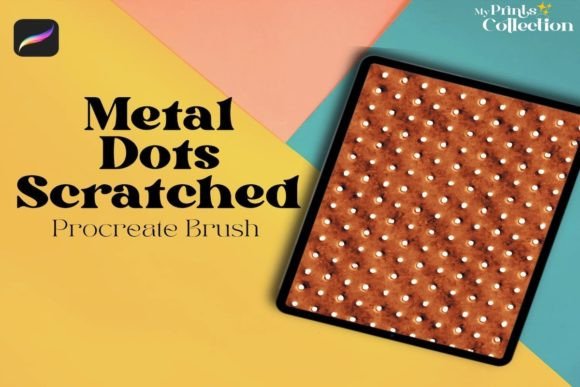
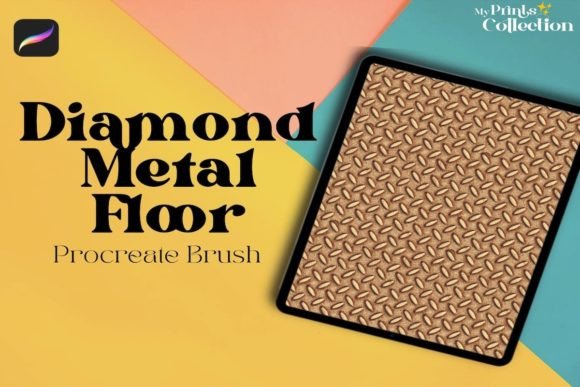
The primary function of the Diamond Metal Floor Procreate Brush is to provide a realistic, repeating pattern that mimics the look of diamond-plate steel or corroded metal surfaces. In a standard digital painting workflow, artists often struggle with the "plastic" look that smooth gradients can create. Real-world metal is rarely uniform; it is characterized by scratches, oxidation, wear patterns, and the specific geometric indentations of diamond plating.
Integrating this brush allows you to bypass the tedious task of painting every individual scratch or rivet by hand. Instead, it acts as a foundational layer upon which you can build lighting and color variations. This approach aligns with efficient project management in art, where time is allocated strategically. By using a pre-made, high-quality texture, you free up cognitive load and time to focus on composition, color theory, and storytelling elements rather than getting bogged down in repetitive micro-details.
It is important to recognize that this tool is most effective when used as part of a layered strategy. It is rarely the final step but rather a crucial intermediate stage. You typically establish your shapes and values first, then introduce the Diamond Metal Floor Procreate Brush to add surface complexity, and finally refine the result with blending modes and opacity adjustments. This sequence ensures that the texture enhances the form rather than obscuring it.
Software Compatibility and System Requirements
Before integrating any new asset into your creative pipeline, verifying compatibility is a critical step to prevent workflow interruptions. The Diamond Metal Floor Procreate Single Brush is specifically engineered for the Procreate application on iPad. To ensure full functionality and access to all features, your device must be running Procreate App version 5 or higher.
This requirement is non-negotiable because newer versions of the software include advanced engine capabilities regarding grain, pressure sensitivity, and wet mix dynamics that older versions lack. If you are operating on an outdated version, the brush may not render correctly, or its unique texturing algorithms might fail to activate, leading to frustration and wasted time.
Furthermore, it is essential to understand the limitations of this asset regarding other industry-standard software. The Diamond Metal Floor Procreate Brush is not compatible with Adobe Photoshop, Illustrator, or any other desktop-based graphic design software. Unlike universal file formats such as .PSD or .AI brushes, Procreate brushes utilize a proprietary format (.brushset) that cannot be interpreted by external applications. Attempting to use this resource outside of the Procreate ecosystem will result in errors or complete failure to import.
For professionals who manage cross-platform projects, this necessitates a clear division of labor. If your workflow involves starting a sketch in Photoshop and finishing in Procreate, you must plan to apply this specific texture during the Procreate phase. Alternatively, if you require similar textures for Photoshop, you would need to seek out a different asset specifically designed for that environment. Acknowledging these constraints early in the planning stage prevents costly detours and ensures a smooth execution of your project.
Strategic Implementation in Creative Projects
The versatility of the Diamond Metal Floor Procreate Brush extends across various stages of a project, depending on the artist's specific goals and the nature of the assignment. Its application can vary from being a preparatory element to a finishing touch.
Preparation and Asset Gathering
During the preparation phase, before a single stroke is made, artists should consider the materials required for the scene. If your brief involves industrial settings, mechanical parts, or dystopian environments, adding this brush to your library beforehand is a strategic move. Having the tool ready allows for immediate experimentation once the base layers are established. This proactive approach minimizes context switching, where you have to stop drawing to search for resources, thereby maintaining creative momentum.
Execution and Layer Management
During the active creation phase, the brush interacts dynamically with your existing layers. A common and effective technique involves placing the Diamond Metal Floor Procreate Brush on a new layer set to a blending mode such as Multiply, Overlay, or Soft Light. This allows the underlying color and shading to show through the texture, creating a sense of depth and integration.
For example, if you are painting a rusted floor, you might lay down a base orange-brown tone, then use the brush at low opacity to introduce the diamond plate pattern. By adjusting the flow and opacity settings within Procreate, you can control how aggressively the texture appears. This interaction between the brush and the blending modes is where the true power of the tool lies, transforming a flat color into a tangible surface.
Refinement and Quality Control
After the initial application, the refinement stage is crucial for quality control. A seamless pattern can sometimes look too repetitive if applied uniformly across a large area. To counteract this, artists can use the Liquify tool or manual erasing to break up the pattern, introducing natural irregularities that mimic real-world wear and tear. This step ensures that the texture feels organic and lived-in rather than like a digital wallpaper.
Additionally, checking the scale of the texture against the perspective of your scene is vital. A diamond plate pattern that looks correct on a close-up detail might appear distorted if applied to a distant background. Adjusting the size of the brush relative to the canvas dimensions ensures consistency throughout the artwork.
Optimizing Efficiency and Consistency
For freelancers, small business owners, and content creators, efficiency is often the difference between meeting a deadline and missing it. The Diamond Metal Floor Procreate Brush contributes to efficiency by reducing the time spent on manual detailing. However, to maximize this benefit, organization is key.
Artists should organize their brush libraries logically, grouping texture brushes separately from line art or coloring tools. This organizational structure reduces the time spent searching for the right tool during high-pressure moments. Furthermore, saving custom presets that include the brush paired with specific blending modes and opacity levels can further streamline the process. These presets act as shortcuts, allowing you to replicate a successful look across multiple projects with a single tap.
Consistency is another factor, particularly for brands or series of illustrations. Using the same texture assets across a portfolio ensures a cohesive visual identity. If you are creating marketing materials for a manufacturing company, for instance, the repeated use of the Diamond Metal Floor Procreate Brush can help establish a recognizable aesthetic that resonates with your target audience.
Long-Term Value and Skill Development
Beyond immediate project completion, utilizing specialized tools like this brush fosters long-term skill development. It encourages artists to think about materials and surfaces more critically. By observing how the brush interacts with light and shadow, users gain a deeper understanding of how metal behaves in different environments. This knowledge translates to better manual painting skills even when the brush is not being used.
Moreover, the ability to rapidly prototype ideas using high-quality textures allows for faster iteration. In a business context, this means presenting more polished concepts to clients sooner, increasing the likelihood of approval and reducing the number of revision cycles. The investment in acquiring and mastering such a tool pays dividends in both speed and the perceived quality of the final output.
Ultimately, the Diamond Metal Floor Procreate Brush is more than just a digital stamp; it is a component of a robust, professional workflow. When understood and applied correctly, it bridges the gap between conceptual design and photorealistic execution, empowering creators to produce compelling, textured art with greater ease and confidence.